Overview
EPIC Code:
- Lab
Soft Test Code:
- MSOT
Send Out Test Code:
- 92433
Alternate Names
- Alzheimer's CSF
- Alzheimer's Disease
- AB 42
- Amylid beta 42
- FDA CSF test
- ptau 181
- total tau
- ttau
Included Tests
Beta-Amyloid (1-42); tTau; pTau181; tTau/Abeta42 Ratio; pTau181/Abeta42 Ratio
Clinical Significance
Elecsys Beta Amyloid (1 42) CSF II, Phospho-Tau (181P) CSF and Elecsys Total Tau CSF are in vitro electrochemiluminescence immunoassays for the measurement of the Beta Amyloid (1 42) (Abeta42), PTau (181P) and Total Tau (tTau) protein concentration in cerebrospinal fluid (CSF) from adult patients aged 55 years and older being evaluated for Alzheimer's disease (AD) and other causes of cognitive impairment to generate a tTau/Abeta42 and pTau-181/Abeta42 ratios and values. A negative result, defined as tTau/Abeta42 and Phospho-Tau (181P) ratio values below cutoff or an Abeta42 value above the measuring range, are consistent with a negative amyloid positron emission tomography (PET) scan result. A negative result reduces the likelihood that a patient’s cognitive impairment is due to AD. A positive result, defined as tTau/Abeta42 and pTau181/Abeta42 ratio value above cutoff, is consistent with a positive amyloid PET scan result. A positive result does not establish a diagnosis of AD or other cognitive disorder. The tTau/Abeta42 and pTau181/Abeta42 ratio results are used as an adjunct to other clinical diagnostic evaluations.
Specimen Collection & Preparation
Specimen Requirements:
-OR-
2.5 mL CSF collected in a 2.5 mL Sarstedt low-bind false bottom tube
Minimum Volume:
1 mL Sarstedt low-bind false bottom tube, 0.7 mL Sarstedt low protein-binding tube** This volume does not allow for repeat testing
Specimen Information:
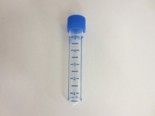
Collection Instructions:
Perform lumbar puncture (LP) using gravity drip collection method. Avoid the use of syringes or tubings. Perform lumbar puncture (LP) before noon. Do not use the first 2 mL of CSF for AD Biomarker measurement.
Subsequently, collect 2.5 mL of CSF directly into 2.5 mL Sarstedt (63.614.625) tube,for AD biomarker measurements. Filling tube at least 50% full is recommended.
Each sample should be visually inspected for hemolysis. Do not use CSF samples which appear reddish. Instead, collect additional clear (non-hemolytic) CSF in a new Sarstedt tube.
Do not process the CSF sample before transport to the measuring site (i.e., no mixing/inverting, no tube transfers, no aliquoting, and normally no centrifugation) until measurement. It is strongly recommended that the sample be kept at 2 to 8° C or -15 to -25° C during transport and storage up to the time of measurement.
Rejection Criteria:
Gross hemolysis
Polystyrene and polypropylene tubes other than Sarstedt (63.614.625) 2.5 mL and (72.703.600) 1.5 mL
Standard CSF polystyrene collection tubes are NOT acceptable as exposing CSF to polystyrene tubes may decrease Abeta42 concentrations.
Transport and Storage:
-
Ambient (18-24°C):
5 days
-
Refrigerated (2-8°C):
14 days
Transport
-
Frozen (-20° C or colder):
56 days
Clinical Interpretation
Reference Range:
| Beta-Amyloid (1-42), CSF | Not established |
| tTau, CSF | Not established |
| pTau181, CSF | Not established |
| tTau/Abeta42 Ratio | ≤0.28 |
| pTau181/Abeta42 Ratio | ≤0.023 |
Methodology:
- Electrochemiluminescence (ECLIA)
Clinical Significance
Elecsys Beta Amyloid (1 42) CSF II, Phospho-Tau (181P) CSF and Elecsys Total Tau CSF are in vitro electrochemiluminescence immunoassays for the measurement of the Beta Amyloid (1 42) (Abeta42), PTau (181P) and Total Tau (tTau) protein concentration in cerebrospinal fluid (CSF) from adult patients aged 55 years and older being evaluated for Alzheimer's disease (AD) and other causes of cognitive impairment to generate a tTau/Abeta42 and pTau-181/Abeta42 ratios and values. A negative result, defined as tTau/Abeta42 and Phospho-Tau (181P) ratio values below cutoff or an Abeta42 value above the measuring range, are consistent with a negative amyloid positron emission tomography (PET) scan result. A negative result reduces the likelihood that a patient’s cognitive impairment is due to AD. A positive result, defined as tTau/Abeta42 and pTau181/Abeta42 ratio value above cutoff, is consistent with a positive amyloid PET scan result. A positive result does not establish a diagnosis of AD or other cognitive disorder. The tTau/Abeta42 and pTau181/Abeta42 ratio results are used as an adjunct to other clinical diagnostic evaluations.
Documentation
This test was developed and its analytical performance characteristics have been determined by Athena Diagnostics. It has not been cleared or approved by FDA. This assay has been validated pursuant to the CLIA regulations and is used for clinical purposes.
Production Schedule
Sites Performed
- Quest - Chantilly to San Juan Capistrano
Days Performed
Monday
Wednesday
Friday
Saturday
Departments
- Sendouts - Miscellaneous
Turn Around Time
3 to 5 days
Coding & Compliance
CDM
00913333
CPT Coding
84393, 82234, 84394