Magnesium is an essential trace element. Deficiency leads to irritability, neuromuscular abnormalities, cardiac and renal damage. Its salts are used as antacids and cathartics. Excessive amount may cause CNS depression, loss of muscle tone, respiratory and cardiac arrest.
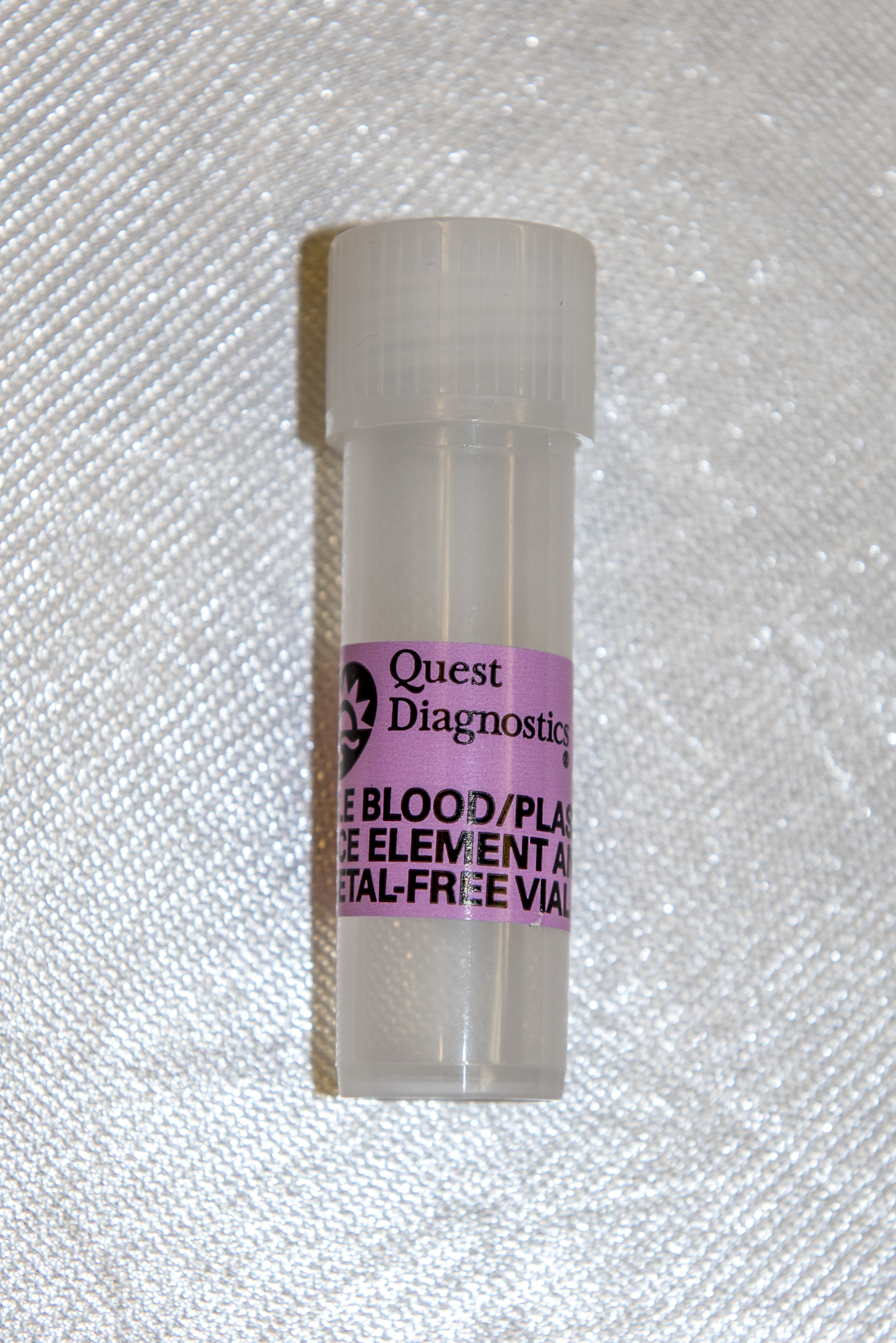
Contact the Client Response Center at 266-1500 (Option 1) to acquire the Plasma Trace Element Metal Free Plastic Vial
Patient should refrain from taking vitamins, or mineral herbal supplements for at least one week before sample collection.
0.5 mL Red Blood Cells (RBC's) from a Navy Blue Top Tube -EDTA Trace metal tube (Purple Striped Label) placed in a Plasma Trace Element Metal Free Plastic Vial
7 days Ambient
7 days Refrigerated
0.2 mL Packed RBC's
4.0 - 6.4 mg/dL
Magnesium is an essential trace element. Deficiency leads to irritability, neuromuscular abnormalities, cardiac and renal damage. Its salts are used as antacids and cathartics. Excessive amount may cause CNS depression, loss of muscle tone, respiratory and cardiac arrest.
4 to 5 days
00911058
83735
.jpg)